

Quantum Chemistry Applications in Drug Design: From Molecular Simulation to Quantum Computing
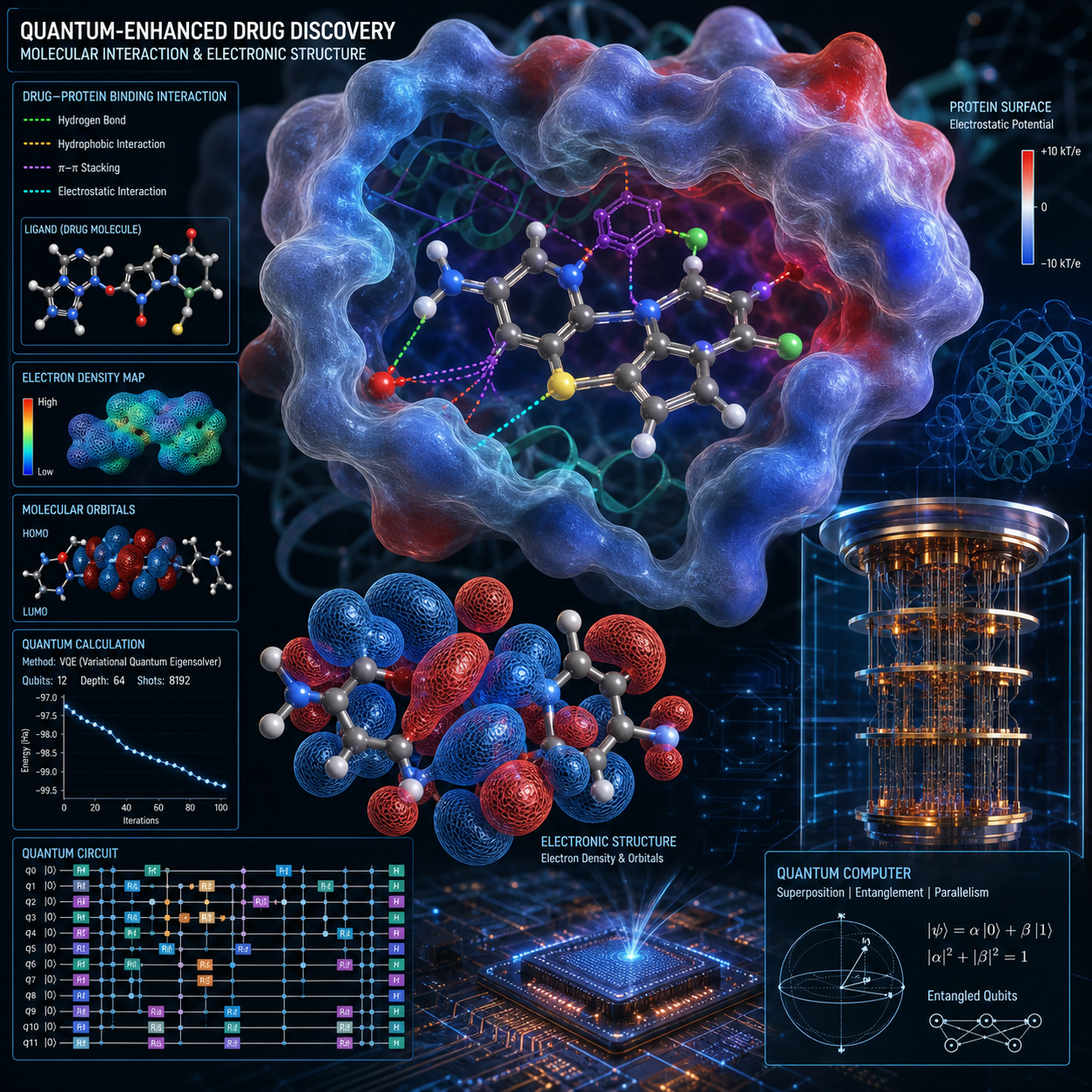
Quantum chemistry applications in drug design help researchers connect a molecule’s electronic structure to its pharmaceutical behavior. By modeling electrons, chemical bonds, molecular interactions, and reaction pathways, these methods support decisions about which compounds to screen, modify, synthesize, or advance.
Most pharmaceutical teams use classical computational chemistry today, including density functional theory (DFT), molecular mechanics, molecular dynamics, and hybrid workflows. Quantum computing may eventually extend these capabilities, particularly for difficult electronic-structure calculations, but practical drug discovery applications remain an active research area rather than a mature commercial solution.
What Is Quantum Chemistry in Drug Design?
Quantum chemistry in drug design uses the principles of quantum mechanics to calculate molecular properties that influence a compound’s activity, stability, and behavior. It focuses on electrons and nuclei, providing information that simpler molecular models cannot always capture.
At the center of the field is the electronic structure of a molecule: the arrangement and energy of its electrons. This structure affects properties such as charge distribution, polarity, orbital interactions, bond strength, acidity, redox behavior, and reaction selectivity. Those properties influence whether a candidate can bind to a protein, cross a membrane, remain stable in solution, or undergo a desired synthetic transformation.
A typical calculation starts with a molecular geometry and solves an approximation of the Schrödinger equation. The result may include total energy, optimized geometry, electrostatic potential, vibrational frequencies, transition states, or relative energies between competing structures.
These outputs become useful when connected to a specific drug-design question. For example, a chemist might use quantum chemistry to compare the protonation states of a kinase inhibitor, assess the reactivity of a covalent warhead, or estimate how a ligand’s electron distribution changes inside a protein pocket.
Why Molecular-Level Accuracy Matters in Pharma
Molecular-level accuracy matters in pharma because small electronic differences can change binding, selectivity, metabolism, solubility, and synthetic feasibility. A structural change that appears minor in a two-dimensional drawing may alter the entire interaction pattern inside a biological target.
Protein–ligand binding illustrates the issue. Hydrogen bonds, ionic interactions, dispersion forces, halogen bonding, and polarization all contribute to binding affinity. Classical molecular mechanics can describe many of these effects efficiently, but its fixed-charge force fields may simplify charge transfer or changes in electronic polarization.
Electronic structure also shapes ligand conformation. Two conformers may have similar steric profiles but different energies because of orbital interactions or intramolecular hydrogen bonding. If a docking or molecular dynamics workflow favors the wrong conformer, researchers may misjudge how the compound fits into a binding site.
Accuracy does not mean that the most detailed method is always the best choice. A highly accurate calculation can be too slow for millions of molecules, while a fast approximation may be sufficient for ranking candidates. Drug design therefore involves a practical balance between chemical realism, throughput, and decision value.
One useful principle is to match computational resolution to the uncertainty of the decision. Use inexpensive methods for broad filtering, more detailed molecular simulation for promising complexes, and high-level quantum calculations for the few chemical questions that could change a lead-optimization strategy.
Key Applications Across the Drug Discovery Pipeline
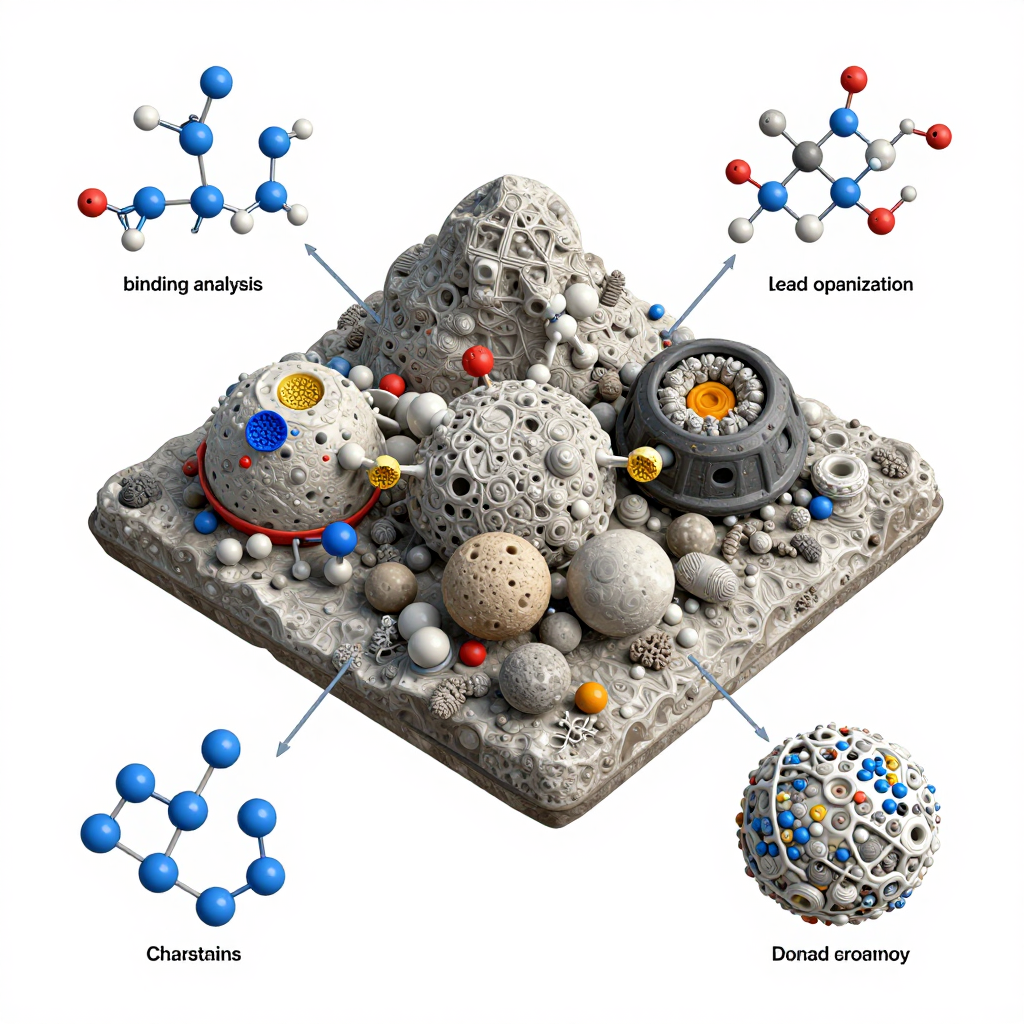
Quantum chemistry supports several stages of the drug discovery pipeline, including virtual screening, protein–ligand binding analysis, molecular property prediction, lead optimization, and reaction modeling. Its strongest role is usually targeted analysis of high-value compounds rather than replacing every faster screening method.
Virtual screening and molecular property prediction
Quantum-derived descriptors can improve the characterization of screening libraries. Examples include partial charges, dipole moments, polarizability, frontier orbital energies, protonation preferences, and tautomer stability. These values can help prioritize molecules with a plausible interaction profile before experimental testing.
Quantum chemistry can also support predictions of properties linked to developability, such as chemical stability, aqueous behavior, and likely metabolic reaction sites. Results remain model-dependent, especially when solvent, protein environment, conformational flexibility, or biological conditions are simplified.
Protein–ligand binding analysis
For protein–ligand binding, researchers may calculate interaction energies for a small number of poses or use quantum mechanics/molecular mechanics methods to treat the binding site and ligand at different levels of detail. This can reveal polarization, charge transfer, metal coordination, and unusual bonding interactions that basic docking scores may miss.
Quantum calculations are particularly relevant when a target contains a metal center, a catalytic residue, or a ligand that forms a covalent bond. They can help distinguish plausible mechanisms from geometrically attractive but chemically unrealistic poses.
Lead optimization and reaction modeling
During lead optimization, quantum chemistry helps explain why one substituent improves potency while another damages stability or selectivity. Chemists can compare conformational energies, estimate electronic effects, and investigate whether a proposed modification changes the molecule’s reactivity.
Reaction modeling is another important application. Calculations can estimate transition states and activation barriers for synthetic steps, metabolic transformations, and covalent inhibitor mechanisms. This information may guide route selection or identify liabilities before a compound reaches extensive testing.
Classical Quantum Chemistry Methods Used Today
Classical quantum chemistry methods remain the practical foundation for molecular electronic-structure calculations in pharmaceutical research. DFT, ab initio methods, molecular mechanics, molecular dynamics, and hybrid quantum mechanics/molecular mechanics each address a different accuracy–cost trade-off.
Density functional theory
Density functional theory, or DFT, estimates molecular energy from the electron density rather than explicitly tracking every many-electron wavefunction. It offers a useful compromise between accuracy and computational cost, making it common for geometry optimization, charge analysis, reaction energetics, and conformational comparisons.
DFT is not a single universal method. Results depend on the chosen functional, basis set, dispersion treatment, solvent model, and treatment of open-shell or metal-containing systems. A method that performs well for organic conformers may be less reliable for transition-metal chemistry.
Ab initio methods and molecular mechanics
Ab initio methods, including Hartree–Fock and post-Hartree–Fock approaches, derive calculations from fundamental physical assumptions with fewer empirical parameters. Higher-level methods can provide valuable benchmarks, although their computational cost limits routine use on large drug-like systems.
Molecular mechanics represents atoms and bonds with parameterized force fields. It is far faster and supports large-scale molecular dynamics, protein flexibility studies, and conformational sampling. However, it generally cannot describe bond breaking, bond formation, or major changes in electronic structure without specialized extensions.
Hybrid quantum mechanics/molecular mechanics workflows
QM/MM methods combine both approaches. A chemically important region, such as a ligand and catalytic residues, receives quantum treatment, while the surrounding protein and solvent use molecular mechanics. This division makes complex simulations possible, though the boundary choice, force-field quality, sampling, and environmental model can strongly affect the result.
How Quantum Computing Could Extend These Applications
Quantum computing could extend quantum chemistry by using quantum algorithms to represent and manipulate molecular wavefunctions in ways that may become difficult for classical computers at larger scales. The most realistic near-term path is a hybrid quantum-classical workflow, where classical software manages most tasks and a quantum processor handles a focused subproblem.
Candidate approaches include the variational quantum eigensolver, quantum phase estimation, quantum approximate optimization methods, and related algorithms for estimating molecular energies. In drug design, the relevant target would be an electronic-structure calculation for a reaction center, metal complex, excited state, or strongly correlated molecular region.
A future workflow might look like this:
- Classical tools generate molecular structures, conformers, and candidate binding poses.
- A quantum chemistry package identifies a chemically difficult region and maps it to a quantum representation.
- A quantum algorithm estimates selected energies or properties.
- Classical optimization, molecular dynamics, or machine-learning models use those results to rank or refine compounds.
This could matter for systems where approximate classical methods struggle, including bond-breaking reactions, electronically complex metal centers, and certain excited-state problems. It would not automatically make every drug molecule easier to simulate. Many pharmaceutical calculations are limited more by sampling, solvent representation, force-field accuracy, or biological uncertainty than by the quantum solution of a small electronic problem.
Quantum computing and quantum chemistry should therefore remain distinct concepts. Quantum chemistry is the scientific framework for modeling molecular behavior. Quantum computing is one possible computational platform for solving selected quantum-chemistry problems.
Challenges to Practical Adoption
Practical adoption faces hardware, algorithmic, and workflow barriers. Current quantum devices are noisy, have limited qubit counts, and require error mitigation or error correction that can add substantial overhead. These constraints make large, chemically accurate simulations difficult.
- Noise and precision: Hardware errors can obscure the small energy differences that matter in binding or reaction prediction.
- Scalability: Mapping a realistic drug–protein system to qubits requires careful reduction, embedding, and active-space selection.
- Computational cost: Repeated measurements and circuit evaluations may make a quantum workflow slower or more expensive than a mature classical approximation.
- Data quality: A quantum calculation cannot correct an inaccurate molecular structure, protonation state, solvent model, or experimental input.
- Software integration: Pharmaceutical teams need connections to molecular databases, docking tools, molecular dynamics platforms, electronic laboratory notebooks, and existing cheminformatics systems.
A common mistake is to compare a small quantum demonstration with a full industrial workflow. A toy molecule may show algorithmic feasibility without proving value for flexible, solvated, biologically relevant compounds. Another mistake is treating a more accurate energy as a guaranteed improvement in clinical success. Drug discovery contains biological and experimental uncertainties that no computational method removes.
The practical correction is to define a narrow benchmark first: a reaction barrier, metal-binding motif, or set of experimentally characterized complexes. Teams should compare accuracy, runtime, reproducibility, and total workflow cost against strong classical baselines.
What the Future May Look Like for Quantum Chemistry in Pharma
The near-term future is likely to favor hybrid quantum-classical drug design, with established classical methods handling scale and quantum processors being tested on carefully selected electronic-structure problems. Progress will depend on useful accuracy, reliable integration, and measurable value for medicinal chemistry decisions.
Pharma research groups can prepare by building capabilities that are valuable regardless of quantum hardware maturity:
- Maintain high-quality molecular, assay, and structural data.
- Benchmark DFT, ab initio, molecular mechanics, and QM/MM methods on relevant chemical series.
- Develop workflows that connect electronic-structure calculations with docking, molecular dynamics, and lead optimization.
- Track quantum algorithms by application rather than by qubit count alone.
- Use experimentally validated tasks to assess whether a new method changes a real design decision.
Longer term, fault-tolerant quantum computers could make more sophisticated molecular simulation accessible for selected systems. The most meaningful effect may be improved understanding of difficult chemistry: catalytic mechanisms, covalent binding, metal coordination, excited states, and reaction selectivity.
That future remains conditional. Quantum chemistry already contributes to drug design through classical methods, while quantum computing is still an emerging route for extending those capabilities. The strongest strategy is to invest in chemically grounded, interoperable workflows that deliver value today and can incorporate quantum algorithms as the technology develops.
Frequently Asked Questions
How is quantum chemistry used in drug design?
Quantum chemistry calculates electronic structure and molecular properties relevant to drug design, including charge distribution, conformational energy, reactivity, reaction barriers, and protein–ligand interaction behavior. Researchers use these results to prioritize compounds and explain experimental trends.
What is the difference between quantum chemistry and quantum computing?
Quantum chemistry is the study and modeling of molecular behavior using quantum mechanics. Quantum computing is a computing technology that may eventually solve some quantum-chemistry calculations more efficiently, but the terms are not interchangeable.
Can quantum computers simulate drug molecules today?
They can simulate small or simplified molecular problems in research settings, but current hardware does not routinely simulate complete, flexible drug–protein systems with the accuracy and scale required for pharmaceutical discovery.
Which drug discovery tasks could benefit most from quantum computing?
Potentially valuable tasks include difficult reaction modeling, metal-centered chemistry, covalent binding analysis, excited-state calculations, and selected electronic-structure problems where classical approximations are limiting.
What are the main limitations of quantum chemistry in pharma?
The main limitations include computational cost, imperfect approximations, limited treatment of solvent and protein flexibility, sampling challenges, uncertain input structures, and the difficulty of translating molecular energy differences into reliable biological outcomes.